
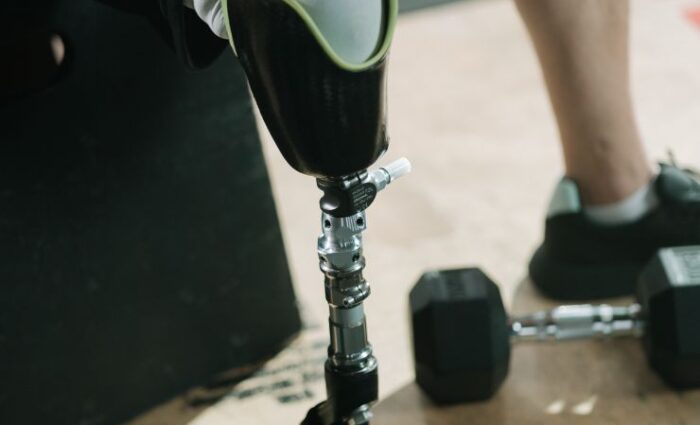
A Professional Perspective for Physicians and Specialists
In the evolving landscape of orthotics and prosthetics, medical professionals are increasingly turning to custom prosthetics as a cornerstone of personalized care. Advances in prosthetic fabrication have made it possible to deliver solutions that are not only structurally advanced but also uniquely tailored to each individual’s residual limb, lifestyle, and mobility requirements.
Grace Prosthetic Fabrication has positioned itself at the forefront of custom prosthetic development, partnering with healthcare professionals to support optimal outcomes for lower limb amputees. From the socket interface to activity-specific designs, custom prosthetics provide a significant clinical advantage in rehabilitation, comfort, and long-term functionality.
This article outlines how custom prosthetics benefit physicians, prosthetists, and rehabilitation specialists in enhancing patient recovery and quality of life, while reducing complications and promoting clinical efficiency.
1. Precision Fit for Better Clinical Outcomes
One of the primary benefits of custom prosthetics is the precision fit. Standard or off-the-shelf prosthetic limbs often result in misalignment, instability, or skin irritation due to generic sizing. Custom prosthetic sockets, in contrast, are fabricated using exact measurements of the residual limb, often captured with 3D scanning or detailed casting techniques.
Clinical Relevance:
- A precise fit reduces shear forces and friction, minimizing skin breakdown and the risk of pressure ulcers.
- Proper alignment supports symmetrical posture and reduces strain on the musculoskeletal system.
- Improved fit facilitates a more natural gait and biomechanical efficiency, which is critical for long-term joint health and spinal alignment.
By working with fabrication partners like Grace Prosthetic Fabrication, healthcare providers ensure that each device promotes better healing, reduced risk of complications, and long-term functionality for lower limb amputees.
2. Enhancing Mobility Through Individualized Design
Every residual limb is different, not only in shape and size, but in skin integrity, muscle mass, and weight distribution. A custom prosthetic considers all of these variables, offering personalized solutions that improve movement and user control.
Key Benefits for Clinical Mobility Goals:
- Improved Load Distribution: Custom prosthetics distribute weight more evenly across the socket, reducing localized pressure and supporting soft tissue health.
- Increased Stability: A prosthetic limb built around the patient’s residual limb promotes improved proprioception and balance, reducing the risk of falls.
- Optimized Component Integration: Custom designs can integrate shock absorbers, microprocessor-controlled joints, and flexible pylons based on patient activity level and mobility goals.
These mobility enhancements directly translate into more successful rehabilitation outcomes, shorter time to ambulation, and reduced dependency on assistive devices.
3. Accelerated Rehabilitation and Patient Adaptation
The adjustment period following limb loss is physically and psychologically challenging. A poorly fitting prosthetic can delay the rehab process, cause frustration, and reduce patient compliance with therapy. Custom prosthetics shorten the learning curve by offering immediate comfort and functionality.
Clinical Advantages of Custom Solutions in Rehab:
- Reduced gait training duration due to improved limb control
- Enhanced muscle reconditioning from supported mobility patterns
- Greater compliance with weight-bearing protocols
- Better integration with physical therapy goals, from treadmill walking to strength training
Custom prosthetics support a smoother transition from inpatient to outpatient rehab programs, empowering therapists and rehab teams to deliver progressive milestones with fewer setbacks.
4. Skin Health and Socket Interface Optimization
Residual limb skin health is critical in prosthetic care. Ill-fitting sockets can lead to chronic issues such as dermatitis, blisters, and infections. Custom prosthetic sockets, designed with anatomical precision, dramatically reduce the risk of these complications.
Prosthetic Fabrication Techniques That Protect Skin:
- Adjustable interfaces that accommodate volume fluctuations in the residual limb
- Use of hypoallergenic and breathable liner materials
- Seamless socket designs that reduce mechanical abrasion
For clinicians managing long-term prosthetic care, reducing the incidence of skin issues leads to fewer office visits, less downtime, and more stable use of the prosthetic device.
5. Activity-Specific Prosthetic Engineering
Modern prosthetic design must account for the lifestyle of the patient. A sedentary patient recovering from surgery has different needs than an active user returning to work or recreational activities. Grace Prosthetic Fabrication works with clinicians to create prosthetic limbs tailored to a wide range of real-world demands.
Examples of Custom Use Cases:
- Workplace Requirements: Heavier load-bearing prosthetics for patients with physical jobs
- Sports and Recreation: High-performance components for running, biking, or hiking
- Aquatic Use: Water-resistant and corrosion-resistant materials for individuals who swim or bathe frequently
This flexibility empowers clinicians to make informed decisions about prosthetic prescriptions that directly align with the patient’s long-term lifestyle and goals.
6. Improved Psychological Outcomes Through Enhanced Functionality
While not a primary clinical metric, psychological resilience is a critical factor in long-term recovery. A prosthetic that supports a patient’s independence and physical self-image plays a major role in overall well-being.
Clinical Impact:
- Reduces dependency on caregivers
- Increases participation in social and family activities
- Promotes a positive attitude during the recovery process
- Encourages active engagement in occupational or recreational therapy
For physicians and therapists, a functional, well-fitting custom prosthetic becomes a tool not only for physical rehabilitation but for mental and emotional stability as well.
7. Reduced Long-Term Risk of Secondary Conditions
Improper gait mechanics and joint compensation are common concerns in lower limb amputees. Over time, misalignment or discomfort from generic prosthetics can lead to:
- Lower back pain
- Contralateral limb overuse
- Joint degeneration in hips or knees
- Skin irritation and pressure ulcers
Custom prosthetic limbs are designed to prevent these issues by promoting better alignment, natural movement patterns, and even pressure distribution. This proactive design approach supports long-term musculoskeletal health and reduces the need for future medical interventions.
8. Streamlined Clinical Workflow and Fewer Adjustments
From a provider’s standpoint, custom prosthetics lead to more efficient clinical workflows. Once the socket and device are properly fabricated, fewer adjustments are required during follow-up appointments.
Operational Advantages for Medical Teams:
- Reduced chair time for socket refitting
- Fewer patient complaints or returns due to discomfort
- Improved prosthetic compliance and fewer complications
- Streamlined communication with fabrication labs
Grace Prosthetic Fabrication supports this streamlined process by maintaining close communication with prescribing clinicians, ensuring alignment between prosthetic design and clinical intent.
9. Supporting Innovation in Prosthetic Fabrication
Working with a fabrication partner that prioritizes innovation is essential in today’s clinical setting. Grace Prosthetic Fabrication employs cutting-edge tools and methodologies to ensure each custom prosthetic delivers measurable value.
Advanced Capabilities:
- Digital modeling and 3D scanning of the residual limb
- CAD/CAM fabrication for repeatable precision
- Integration of smart components (sensors, microprocessors)
- Custom finishing to enhance wearability and durability
These technologies translate to better outcomes, faster turnaround times, and prosthetic devices that align with the evolving standards of rehabilitative medicine.
FAQs: Custom Prosthetic Fabrication for Lower Limb Prosthetics
1. What is the clinical advantage of custom prosthetic sockets over standard options?
Custom prosthetic sockets are designed based on detailed anatomical measurements of the patient’s residual limb, ensuring superior fit, comfort, and alignment. This reduces skin irritation, promotes a natural gait, and supports better overall musculoskeletal health. In contrast, off-the-shelf sockets often lead to increased friction, pressure sores, and compensatory movement patterns.
2. How does Grace Prosthetic Fabrication ensure an accurate fit for custom sockets?
We use advanced technologies, including 3D limb scanning, CAD/CAM modeling, and iterative design reviews with prescribing clinicians. This data-driven process allows for high-precision socket interfaces that are tailored to each patient’s limb shape, tissue sensitivity, and alignment needs.
3. What materials are used in custom lower limb prosthetics, and how are they selected?
Materials such as carbon fiber, medical-grade thermoplastics, silicone liners, and titanium are commonly used. Material selection depends on the patient’s weight, activity level, limb sensitivity, and specific goals (e.g., durability, shock absorption, water resistance). Grace Prosthetic Fabrication consults with clinicians to ensure material compatibility with the patient’s rehab plan.
4. Can custom prosthetics be fabricated for patients with complex residual limb shapes or comorbidities?
Yes. Custom prosthetics are ideal for patients with irregular residual limb geometry, significant soft tissue volume, or complicating factors like skin grafts or vascular issues. Our design team specializes in creating adaptive socket shapes and interfaces that accommodate unique anatomical and medical challenges.
5. How do custom prosthetics support faster rehabilitation?
Because custom prosthetics offer a more secure, comfortable, and anatomically aligned fit, patients experience less pain, improved control, and better balance early in the rehab process. This enables physical therapists to introduce gait training and strength-building exercises sooner and more effectively.
6. What is the typical turnaround time for custom prosthetic fabrication?
Turnaround times vary based on complexity, but most custom lower limb prosthetics are fabricated and ready for fitting within 7–14 business days after receiving all necessary specifications. Rush services may be available for urgent clinical needs.
7. How are volume fluctuations in the residual limb managed in a custom socket?
We incorporate design features such as adjustable socket inserts, modular liners, or volume accommodation pads to account for day-to-day or long-term changes in limb size. This adaptability reduces the need for frequent socket replacements and ensures consistent performance.
Contact Grace Prosthetic Fabrication for Custom Prosthetic Fabrication
Custom prosthetics are more than personalized devices; they are clinical solutions that enhance mobility, reduce complications, and support holistic patient recovery. For doctors, specialists, and prosthetists, prescribing custom-designed lower limb prosthetics means providing care that reflects the highest standard of precision medicine.
Grace Prosthetic Fabrication is committed to advancing prosthetic development with a focus on quality, clinical collaboration, and long-term success. Our solutions are fabricated to meet the demands of today’s medical professionals, offering durability, comfort, and functionality tailored to each patient’s life and rehabilitation goals.
To learn more about our custom prosthetic fabrication services or to schedule a clinical consultation, contact Grace Prosthetic Fabrication today.